

 By ATN Editorial Team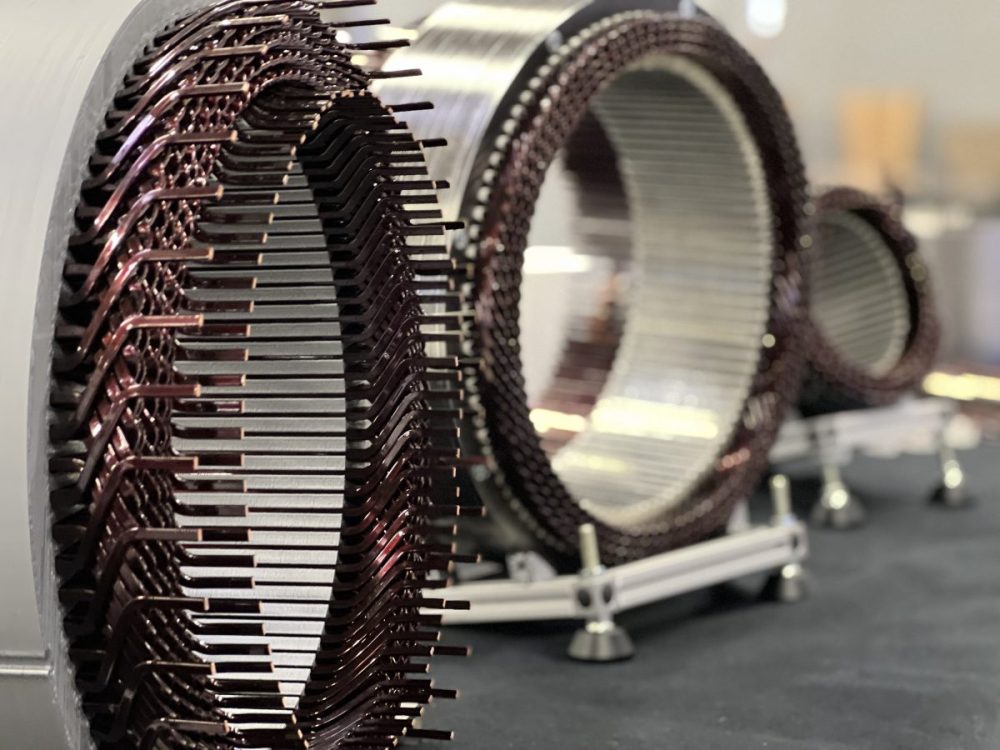
After almost four years, the Chair of Production Engineering of E-Mobility Components (PEM) of RWTH Aachen University has successfully concluded the HaPiPro² electric motor research project. Funded by the German Ministry of Economic Affairs of the State of North Rhine-Westphalia, the project brought together PEM and partners from research and industry on the further development of production concepts for the hairpin stator as one of the central components of the electric drive.
Setting up an in-house production plant
PEM had set up a prototype demonstration plant specifically for this purpose in order to enable the manufacture of different stator variants using the same process technologies and production systems, thereby increasing the efficiency of the production process in the long term. During the course of the research project, the consortium succeeded in manufacturing hairpin stators for both passenger cars and heavy-duty commercial vehicles such as electric trucks on the same production line. “It is possible to design the production process chain in such a way that the manufacture of electric motor stators becomes flexible in terms of variants and therefore significantly more efficient,” says PEM Director Professor Achim Kampker.
Digital concepts as the next step
After the project is completed, PEM will intensively continue its research into the influence of variant drivers in hairpin stator production. In addition to expanding the infrastructure also for the rotor component, the plan is now to implement digitalization systems along the production process chain. Digital tools such as predictive maintenance and predictive process parameter control are suitable for significantly improving the efficiency of numerous production steps. Furthermore, the prototype stator production line set up as part of the project is to be given a digital twin for downstream process and production simulation in future.
Project partners and further information
HaPiPro² was a joint project between PEM and the Digital Additive Production (dap) Chair at RWTH Aachen University as well as Ford, ENGIRO, AMS Anlagenbau, Berg & Co., and thyssenkrupp System Engineering. Further information on the project is provided here.
