

 By ATN Editorial Team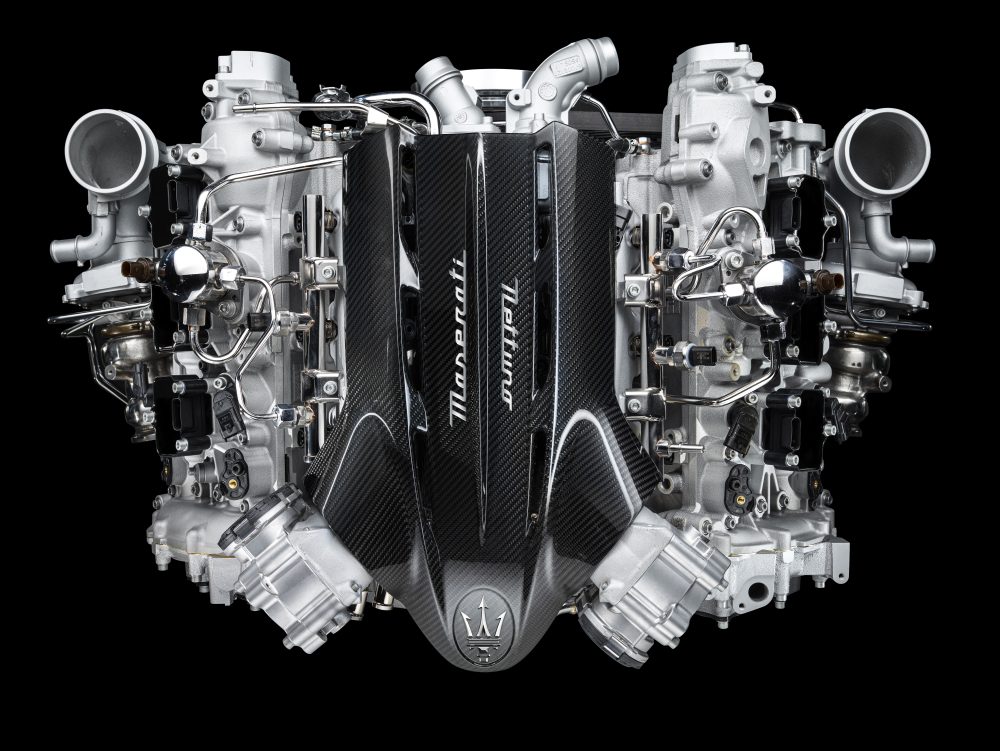
Summary: Bosch Engineering has developed an optimised hydrogen race engine based on the Maserati Nettuno 3.0-litre twin-turbo V6, producing roughly 480 kW and 880 Nm in the Ligier JS2 RH2 demonstrator due to lap Le Mans on 13 June 2026.
Key engineering takeaway: The current version swaps the earlier combined direct and port fuel injection for modern hydrogen direct injection with Bosch HIDI LCV injectors, with the piston shape revised and compression ratio lowered to extract more power and performance at high RPM.
Why it matters: After nearly 8,000 km of track testing without reported failures, the Ligier JS2 RH2 hydrogen race engine programme is now being framed as a stepping-stone to a decarbonised track-day car combining Maserati engine architecture with Bosch hydrogen systems.
Bosch Motorsport’s commitment to the 24 Hours of Le Mans is once again centered on greater sustainability this year. The demonstration of long-distance-capable alternative motorsport powertrains from Bosch Motorsport enters the next phase with the optimized hydrogen engine based on Maserati’s Nettuno gasoline engine.
“To make a vision like the hydrogen race car a reality, you need a strong team. Our strategic partnership with Ligier Automotive is the foundation on which we are developing and testing the vehicle. At the same time, our collaboration with Maserati provided a first-class basis for the engine. This pooling of expertise is our key to bringing sustainable performance to the road faster.”
Ingo Mauel, Head of Bosch Motorsport
Inside the Maserati Nettuno hydrogen race engine
The hydrogen unit developed by Bosch Engineering is fundamentally based on the Maserati Nettuno, a 3.0-liter six-cylinder gasoline engine with biturbo charging and dry sump lubrication. For the conversion to hydrogen operation, core components like the cylinder head and turbocharger were retained from the original design. Within the base engine, a key modification was solely made to the pistons, which were optimized in shape and to lower the compression ratio in order to extract even more power and performance at high RPM’s. The modifications include, among other things, the injection system, the ignition system, and the engine control unit. Instead of the combined direct and port fuel injection, the current version uses modern hydrogen direct injection with HIDI LCV injectors from Bosch. This allows the 3.0-liter hydrogen engine to produce around 480 kilowatts and deliver 880 Newton-meters of torque in this Motorsport application.
“Nettuno is a state-of-the-art engine that continues to demonstrate robustness, efficiency, and versatility. For this reason, it has proven to be particularly well-suited for conversion to hydrogen, thanks to its inherent strength, which allows it to withstand very high cylinder pressures.”
Davide Danesin, Head of Maserati Engineering
From the Le Mans demo lap to a hydrogen race engine track-day car
To make the potential of a race car with a hydrogen engine tangible, Bosch Engineering entered into a strategic partnership with Ligier Automotive in 2021. The result is the development of the hydrogen-powered race car prototype, the Ligier JS2 RH2. The vehicle was first presented at the 24 Hours of Le Mans in June 2023. In the tests conducted since then, the vehicle and engine have proven their robustness over almost 8,000 test kilometers on track under various weather conditions without any technical issues. Continuous optimizations have led to the further development of the hydrogen concept; for example, the drive’s torque and power were increased while further reducing emissions.
“The Ligier JS2 RH2 project perfectly illustrates what can be achieved when three complementary areas of expertise come together. Our collaboration with Bosch Engineering and Maserati allows us to explore the full potential of hydrogen in motorsport, combining performance with sustainability. It also echoes a meaningful chapter in our history — the original Ligier JS2, powered by a V6 3.0L Maserati engine, claimed victory at the Tour Auto in 1974. Today, this legacy inspires us to look ahead. Together, we are not only developing a race car demonstrator, but also opening the door to future applications, such as a decarbonized track-day car integrating Maserati engine technology and Bosch hydrogen systems.”
Jacques Nicolet, President of Ligier Automotive
As in previous years, the Ligier JS2 RH2 with its hydrogen engine will complete a demo lap on the Le Mans race circuit on Saturday, June 13, 2026, and will be on display in the H2 Village throughout the race week.
For more hydrogen news, click here.
