

 By ATN Editorial Team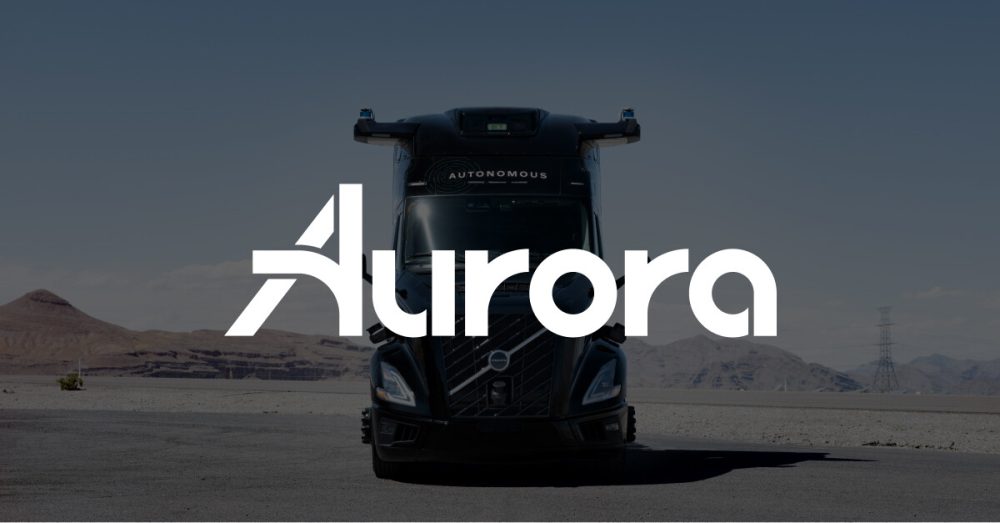
Summary: Aurora Innovation has launched its second-generation driverless trucks in the US, based on the International LT Series and running the company’s next-generation compute and sensing hardware. The fleet will be deployed across 10 driverless routes in the US Sun Belt.
Key engineering takeaway: The new hardware is built to last one million miles, which is the durability threshold Aurora identifies as the gating factor for scale rather than raw capability. Aurora closed its Safety Case for the new truck and hardware before launch, meaning the assurance argument was re-established for the changed platform rather than carried over. Roush is installing the redundant systems and integrating the hardware at a dedicated production facility, with a formalised upfit process targeting an annual run-rate of 1,000 trucks.
Why it matters: The engineering story here is manufacturability and durability, not autonomy. Aurora has completed nearly 440,000 driverless miles since launching in Texas, so the constraint has shifted to whether a redundant-by-design Class 8 platform can be upfitted at volume by a contract manufacturer. Anyone working on redundant steering, braking or power architectures for autonomy will recognise the million-mile target as the number that decides unit economics.
- Aurora has launched its second-generation driverless trucks and plans to deploy the new fleet across a commercial network of 10 driverless routes in the US Sun Belt.
- Manufacturing partner Roush is targeting an annual production run-rate of 1,000 trucks by the end of the year.
- The next-generation hardware is built to last one million miles, and Aurora closed its Safety Case for the new truck and hardware prior to launch.
Aurora Innovation, Inc. (NASDAQ: AUR), the leader in self-driving freight, has launched its second-generation driverless trucks. Aurora plans to deploy the new fleet across its commercial network, which currently encompasses 10 driverless routes throughout the U.S. Sun Belt, to serve additional customers.
Aurora made history when it deployed Class 8 trucks powered by the Aurora Driver, its self-driving system, on public roads last year. As of the end of June, the Aurora Driver has completed nearly 440,000 driverless miles. The company’s route expansion is also driving significant commercial momentum, underscored by a customer’s recent plan to purchase 500 Aurora Driver-powered trucks.
“Last year’s driverless launch proved our technology could operate safely on public roads – our new platform now provides the foundation to deliver at scale,” said Chris Urmson, CEO and co-founder of Aurora. “Deploying our second-generation truck allows us to put hundreds of autonomous trucks on the road and ultimately into the hands of more customers.”
Next-Generation Hardware Behind The Driverless Trucks
The new fleet, based on the International® LT® Series vehicle, is also powered by Aurora’s next-generation hardware. This hardware is more powerful and built to last one million miles, key factors for deploying at scale. Prior to launch, Aurora closed its Safety Case, its well-established bar for operations on public roads without a person behind the wheel, for the new truck and hardware.
Roush Targets A 1,000-Truck Annual Run-Rate
Roush, a premier product development supplier, is installing redundant systems and integrating Aurora’s next-generation hardware into the new trucks at a production facility dedicated to Aurora. The companies have also formalized an upfit process, positioning Roush to reach an annual production run-rate of 1,000 Aurora trucks later this year.
“By working with a world-class manufacturing partner like Roush, we can meet our customer demand and continue to make the movement of goods safer and more efficient across the country,” added Urmson.
For more autonomous truck news, click here.
