

 By ATN Editorial Team
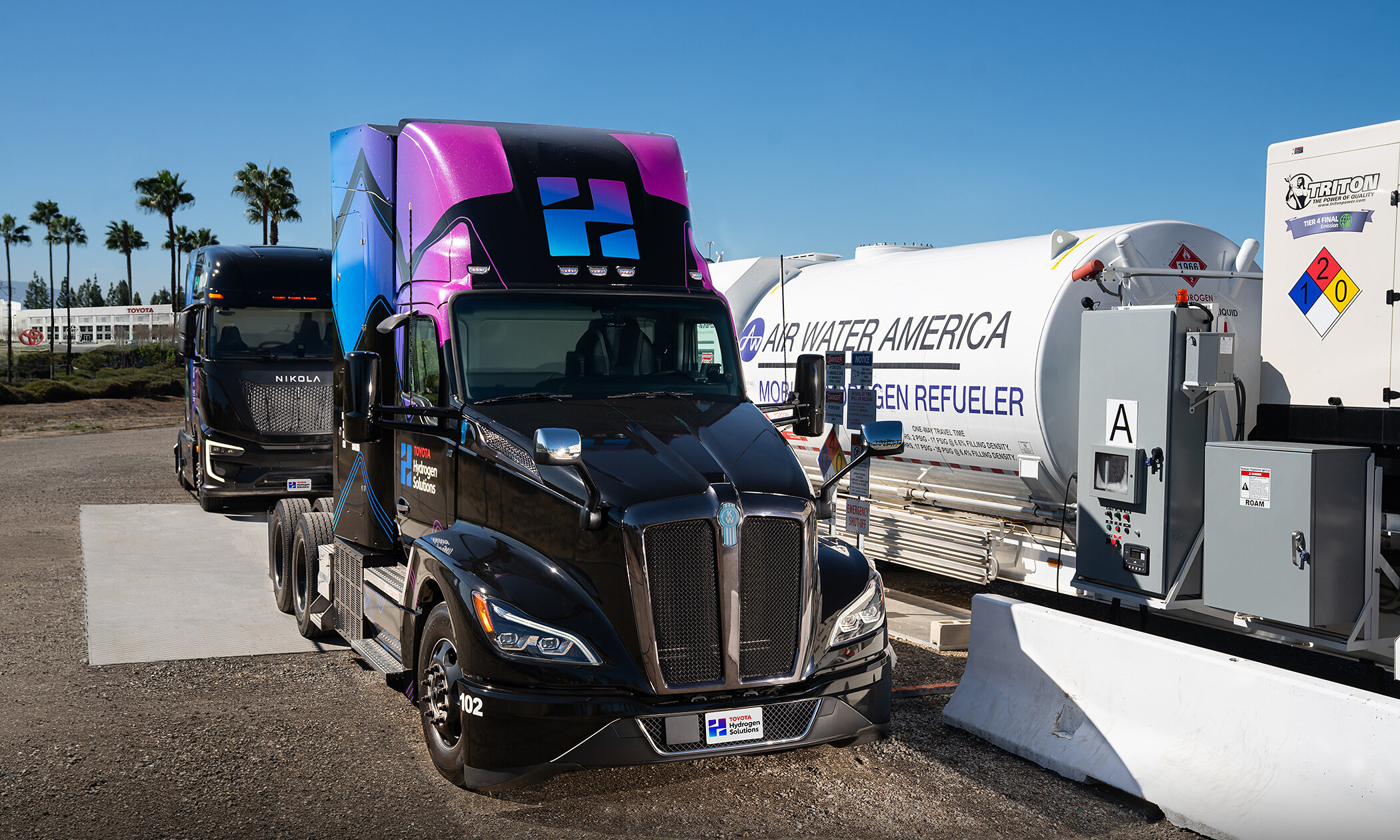
Summary: Toyota Motor North America’s Hydrogen Headquarters (H2HQ) has installed two mobile hydrogen fuelers at its North American Parts Center California (NAPCC) to fuel heavy-duty fuel cell trucks hauling freight from the Port of Los Angeles to Ontario, with a permanent station planned on the site. Working with the U.S. Department of Energy’s National Laboratory of the Rockies (NLR), Toyota has also demonstrated high-flow hydrogen fueling of Toyota-powered heavy-duty trucks in testing to the SAE J2601-5 standard.
Key engineering takeaway: High-flow hydrogen fueling at 70 MPa lets trucks accept hydrogen at up to 300 g/s, which Toyota says is about five times faster than conventional light-duty fueling technology and lets a heavy-duty truck take on energy at a speed equivalent to a 20 MW fast charger. In multiple rounds of testing per SAE J2601-5, Toyota and NLR engineers and researchers showed that Toyota-powered heavy-duty trucks can be refuelled in about eight minutes for a range of up to 450 miles.
Why it matters: The release measures the result against diesel: refuelling times with high-flow hydrogen fueling are comparable to modern diesel-powered heavy-duty trucks, while fuel cells emit only water. Production Toyota-powered trucks are expected to enter commercial operations in 2027, and when the permanent NAPCC station goes online Toyota plans to offer conventional and high-flow fueling for heavy-duty trucks alongside a separate area for light-duty vehicles.
Toyota Motor North America’s Hydrogen Headquarters (H2HQ) division is making steady progress in fueling improvements for heavy-duty fuel cell trucks as it works to bring these advancements to Toyota’s commercial fleets in the U.S.
Toyota recently installed two mobile hydrogen fueling devices at North American Parts Center California (NAPCC), its largest parts distribution facility in the U.S. With the tanks and fuel ready, Toyota’s commercial logistics fleets plan to use the mobile fuelers to support Toyota operations by fueling heavy-duty fuel cell trucks hauling freight from the Port of Los Angeles to Ontario, and throughout the region. A permanent station is planned to be built on location.
The station will initially fuel heavy-duty trucks commissioned through Hyroad Energy and will later integrate heavy-duty trucks with Toyota’s own certified fuel cell powertrain.
High-Flow Hydrogen Fueling Testing With The National Laboratory Of The Rockies
In a public-private partnership, Toyota is collaborating with the U.S. Department of Energy’s National Laboratory of the Rockies (NLR) in Golden, Colorado, to research several initiatives, including 70 MPa high-flow hydrogen fueling for heavy-duty trucks.
High-flow fueling allows trucks to accept hydrogen fuel at speeds up to 300g/s, or about five times faster than the rate of conventional light-duty fueling technology. It allows heavy-duty trucks to carry energy into the vehicle at an equivalent speed of a 20 MW fast charger. Refueling times are comparable to modern diesel-powered, heavy-duty trucks. Unlike a diesel powertrain, however, fuel cells emit only water.
Toyota and NLR engineers and researchers have performed multiple rounds of testing per SAE J2601-5 standards, successfully demonstrating that Toyota-powered heavy-duty trucks can be refueled in about eight minutes for a range of up to 450 miles.
Production Toyota-powered trucks are expected to hit the open road for commercial operations in 2027.
High-Flow Upgrade At H2HQ And The Permanent NAPCC Station
Over the next several months, Toyota aims to upgrade its private fueling infrastructure at its H2HQ to the same high-flow standard for testing heavy-duty vehicles. It also plans to install new equipment for light passenger fuel cell electric vehicles in order to evaluate station hardware and share insights intended to improve operations and reliability.
When the publicly available permanent station at NAPCC goes online, Toyota plans to provide conventional and high-flow hydrogen fueling for heavy-duty trucks, along with a separate area for fueling light-duty vehicles.
Toyota continues to develop and refine fuel cell technologies for heavy-duty vehicles, commercial applications, stationary power generation and light-duty passenger vehicles, including supporting past, current and future vehicle development.
High-Flow Hydrogen Fueling: Frequently Asked Questions
What is high-flow hydrogen fueling?
High-flow hydrogen fueling is a way of refuelling heavy-duty fuel cell vehicles at far higher hydrogen mass flow rates than the dispensers used for passenger cars. In Toyota’s release, high-flow fueling at 70 MPa allows trucks to accept hydrogen at up to 300 g/s, about five times faster than conventional light-duty fueling technology, so that heavy-duty trucks can carry energy into the vehicle at a speed Toyota equates to a 20 MW fast charger.
What is SAE J2601-5?
SAE J2601 is a family of SAE International standards that set out fueling protocols for gaseous hydrogen vehicles: the rules a station follows on pressure, flow and gas temperature so that a vehicle’s tanks are filled quickly while staying within their safe operating limits. Part 5, J2601-5, covers high-flow fueling of heavy-duty vehicles. Toyota and NLR engineers and researchers performed multiple rounds of testing per SAE J2601-5 standards.
How long does it take to refuel a Toyota-powered heavy-duty fuel cell truck?
In testing with NLR, Toyota-powered heavy-duty trucks were refuelled in about eight minutes for a range of up to 450 miles. Toyota says these refuelling times are comparable to modern diesel-powered heavy-duty trucks.
What does 70 MPa mean in hydrogen fueling?
70 MPa, about 700 bar, is a pressure class for compressed hydrogen storage and dispensing. Storing hydrogen at higher pressure puts more hydrogen mass into a given tank volume, which is why 70 MPa is used where vehicle range matters. Toyota’s work with NLR covers 70 MPa high-flow hydrogen fueling for heavy-duty trucks.
When will Toyota-powered fuel cell trucks enter commercial operation?
Production Toyota-powered trucks are expected to hit the open road for commercial operations in 2027. The planned permanent station at Toyota’s North American Parts Center California will initially fuel heavy-duty trucks commissioned through Hyroad Energy and will later integrate heavy-duty trucks with Toyota’s own certified fuel cell powertrain.
Further Reading
- Toyota Fuel Cell System Goes To Scania And IVECO Trucks
- Eight Companies Form Hydrogen Truck Consortium For Germany
- EKPO Launches New NM20 Fuel Cell Stack For Series Production
- Toyota Partners with Hydrogen Refueling Solutions and ENGIE for Fast Hydrogen Refuelling Infrastructure
For more hydrogen news, click here.
