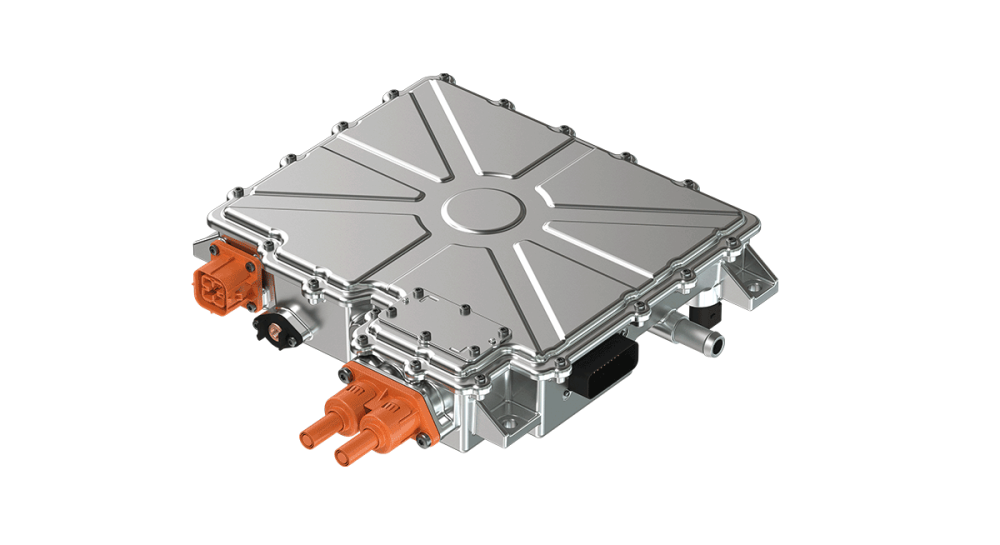
Major OEM Selects Valeo’s 5-in-1 Power Electronics Module

Valeo power electronics

Summary: Valeo has been selected by a leading Chinese New Energy Vehicle (NEV) manufacturer to supply its new 5-in-1 Deep Integration Power Electronics Module for future electrified powertrains. This compact and cost-optimised unit integrates five core power electronics functions into a single box and is set for production in 2026. The module achieves around 20% weight reduction and has been fast-tracked from concept to production-ready in under a year.

Auto Tech View:

  • Combines inverter, OBC, DC/DC converter, power distribution unit, and eFuse into a single compact module with shared SoC architecture.
  • Supports trends in electric vehicle development such as EE architecture consolidation, system integration, and platform-based engineering.
  • Relevance to engineers includes simplified wiring, reduced system complexity, improved thermal and energy efficiency, and lower validation effort — key for next-gen EV design and scalability.

A leading Chinese New Energy Vehicle (NEV) manufacturer has selected Valeo 5-in-1 Deep Integration Power Electronics Module for electrified powertrains. Valeo has developed this new solution to offer an efficient, lightweight, and cost-effective solution to support the development of electrified mobility.

Valeo’s new solution offers a deeply integrated electrical and software fusion architecture and integrates in a single box, and based on a shared SoC, the Inverter, the On Board Charger, the DC/DC Converter, the Power Distribution Unit and the eFuse. With the evolution of Electric and Electronic (EE) architectures, the compactness, lightweight design and cost optimization of eDrive and power electronics components have become critical customer priorities. With around 20% of weight reduction, Valeo 5-in-1 Deep Integration Power Electronics Module supports customers’ next-generation eDrive system development and vehicle architecture evolution.

To reduce development time and meet the increasing pace of customer and market demands, Valeo has deployed a more flexible approach, based on a platform leveraging pre-developped technical bricks. This enabled the entire project to move from concept to mass production readiness in under a year, with production slated to begin in 2026.

Xavier Dupont, CEO of Valeo Power Division, said: “This award demonstrates Valeo Power’s agility and competitiveness. Our teams were able to develop this new 5-in-1 Deep Integration Power Electronics Module by bringing together our expertise in power electronics and system integration. Its compact architecture and cost-effectiveness meet the needs of our customers in China and overseas, and will contribute to Valeo’s mission to make mobility more sustainable“.

The Valeo 5-in-1 Deep Integration Power Electronics Module achieves significant key performance improvements through innovative system integration:

  1. Highly Integrated Architecture
    Relies on a single SoC (System on Chip) to enable hardware resource sharing between the inverter, DC/DC and gateway controller. This reduces system complexity through resource optimization, significantly minimizing signal transmission latency and power consumption.
  2. High-Performance Output Power
    Delivers 600A RMS continuous AC output on a 400V platform, with peak power reaching 170kW to meet high-performance EV driving demands. Certified to ASIL C functional safety level, ensuring reliable vehicle torque control.
  3. Flexible Charging Compatibility
    Supports 7kW/11kW OBC configurations compatible with global mainstream charging standards and integrates a 3kW DC/DC converter module.
  4. Comprehensive Safety Compliance
    Features a built-in eFuse intelligent protection system to reduce failure rates. Complies with industry regulations and safety standards, enhancing overall system safety.

The optimized Electric and Electronic (EE) architecture design of the module substantially reduces wiring harness quantity and length, while its compact layout enhances OEM assembly efficiency. Cost control is achieved through component consolidation, lowering system costs and reducing component development/validation expenses, as well as through a weight reduction of approximately 20%. Furthermore, the optimized energy transfer path significantly decreases vehicle energy consumption. Brought together, these innovations offer an efficient, lightweight, and cost-effective electrification solution.

For more power electronics technology news, click here.

Source

The latest technology and engineering news direct to your inbox.

Discover more from Auto Tech News

Subscribe now to keep reading and get access to the full archive.

Continue reading