

 By ATN Editorial Team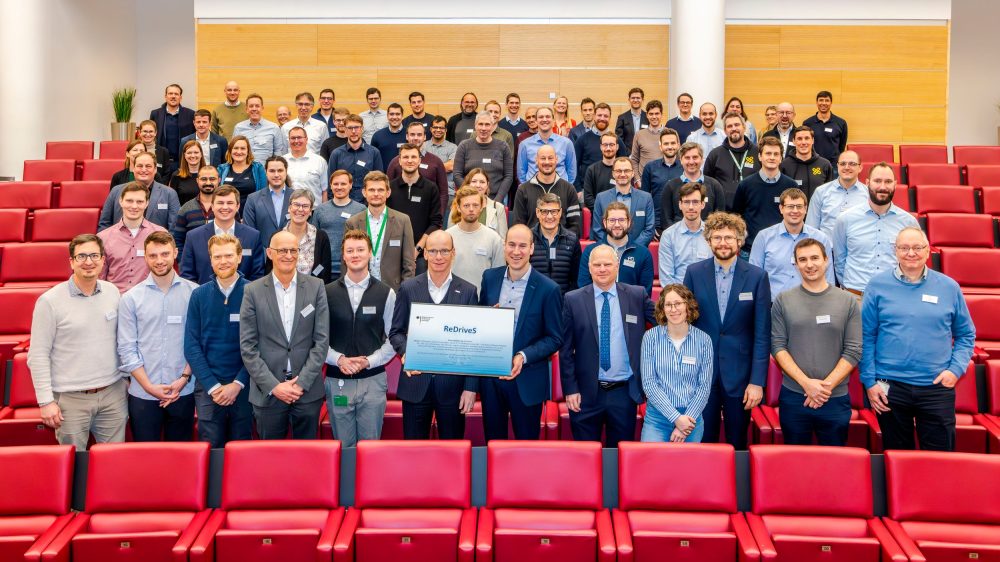
Summary: Schaeffler is coordinating the ReDriveS lighthouse project, a €25+ million, BMWE-funded initiative bringing together 25 partners to develop an automated, scalable recycling concept for electric axle drive systems. The project combines robot-guided non-destructive disassembly, innovative recycling processes and digital twins to enable cross-manufacturer circular material flows, secure access to critical raw materials such as rare earths, and support compliance with future recycling regulations.
Engineering takeaway: ReDriveS applies digital twins and automated robotics to assess axle drive condition and determine optimal disassembly paths, from reuse and repair through to component-level recycling. The approach enables recovery of high-value materials including NdFeB magnets, copper and aluminium, while creating a generic, cross-OEM digital framework for lifecycle data use.
Why it matters: As EV volumes grow, electric axle drives represent a major untapped opportunity for circularity and supply-chain resilience. Automated, data-driven recycling reduces CO₂ footprint, lowers dependence on constrained raw materials, and helps the automotive industry meet tightening sustainability and recycling targets at scale.
Schaeffler coordinates the ReDriveS lighthouse project, which is funded by the German Federal Ministry for Economic Affairs and Energy (BMWE), together with 25 partners from industry, SMEs, and science. The aim of the project is to develop an industrial, automated and scalable recycling concept for electric axle drive systems – from non-destructive dismantling to innovative recycling processes and digital data use. In this way, ReDriveS not only creates a technological advantage in complying with legal recycling requirements, but also ensures affordable access to high-quality raw materials such as rare earths in the future. ReDriveS has a project volume of more than € 25 million with over € 16 million in total funding. The project will run for 36 months and will make an important contribution to the sustainable transformation of the mobility and automotive industries.
Prof. Dr. Tim Hosenfeldt, Head of Central Technologies, Schaeffler AG, says: “With ReDriveS, we are launching a key project for the circular economy in electromobility together with BMWE and strong partners. Our goal is to make electric axle drives much more resource-efficient via digital twins, automated dismantling and high-quality recycling – and thus secure raw materials and supply chains, reduce CO₂ and strengthen Germany as a business location overall.”
With the robot-guided non-destructive disassembly of electric axle drives, Schaeffler wants to pave an ecologically and economically sensible path for a circular material flow of valuable materials across manufacturers – something that does not yet take place with axle drives. Rare earths in the magnets as well as copper, aluminum, steel and electronic components play a special role. The scalable disassembly concept will support both the repair of the axle drive, the reuse of partial components, or their recycling. An evaluation matrix processes information about the condition and geometry of the respective electric axle drives, and will be able to derive economic disassembly scenarios for the dismantling robot. To this end, Schaeffler’s second main task, in addition to project management, is to develop a demonstrator linked to a digital twin that collects and processes data over the entire life cycle of an electric axle drive. Depending on the service life condition of the final drive component, the electric axle drive can only be disassembled into its main units (typical: motor, inverter, transmission) or down to the component level (for recycling). The generic digital twin created in the project can be used across manufacturers. With a view to the further market development of electric axle drives as a cornerstone of sustainable mobility, ReDriveS will also develop new data-based business models for axle drives. The digital twin is also an important prerequisite for this.
As a national lighthouse project, ReDriveS addresses three key topics of the mobility transition: system capability, digitalisation and sustainability. The focus is on the development of automated, robot-guided disassembly systems for electric axle drives, recycling processes for rare earth magnets (NdFeB) and other strategic materials, as well as the development of a digital ecosystem with digital twins for cross-manufacturer data use.
The project makes a significant contribution to the resilience of the value chain in electromobility and makes an important contribution to meeting future recycling quotas and reducing the future CO₂ footprint of electric vehicles in Germany and Europe.
Digitalisation and circular economy for the automotive industry
With its combination of automation, digitalisation and circular economy, ReDriveS is an example of the transformation of the German automotive industry towards sustainable, data-driven and resource-efficient production systems. After completion, the results of the project will be transferred to industrial applications and made usable as an industry solution for OEMs, suppliers and recyclers.
For more automotive recycling technology news, click here.
