

 By ATN Editorial Team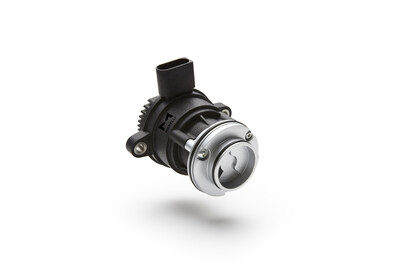
Summary: Ahead of Auto China 2026 (Beijing, 24 April to 3 May), Marelli has detailed the propulsion and thermal innovations it will display, led by the new e-Transmission Cooling Pump for e-axle thermal management, alongside a High-Performance Chiller for battery thermal management and an eAxle Oil Cooler.
Key engineering takeaway: The e-Transmission Cooling Pump is the centrepiece of Marelli’s e-axle thermal management offering, delivering on-demand oil cooling for e-axles and Dedicated Hybrid Transmissions (DHT) at 40% system efficiency, with a claimed 30 W saving versus the main market benchmark. It is available in 12 V and 48 V variants and uses a modular architecture based on brushless technology and integrated electronics — the same base module supports multiple transmission-level applications, reducing integration and validation costs across programmes.
Why this matters: Marelli says its e-axle thermal management pump, with a 30 W saving against the main market benchmark, minimises energy consumption and improves both electric and fuel economy. The modular architecture matters because, according to Marelli, the same base module can support multiple transmission-level applications and reduces integration and validation costs.
Why it matters: The e-Transmission Cooling Pump delivers precise, on-demand oil cooling for e-axles and DHT, and Marelli says it is the first application of its modular smart actuator concept, ensuring compatibility with current vehicle architectures and emerging multi-voltage platforms.
Marelli, a global technology partner to the automotive industry, will highlight a selection of propulsion and thermal innovations among the solutions displayed at its booth at Auto China 2026 (Beijing, 24 April–3 May), themed “Rooted in innovation, everywhere”. These technologies are examples of how Marelli supports vehicle makers across the powertrain evolution, with solutions tailored for different propulsion configurations and regional requirements.
A major highlight at Marelli’s booth will be the new e-Transmission Cooling Pump, a system engineered to deliver precise, on-demand oil cooling for modern transmissions. The solution maximises efficiency, enabling a 30-watt saving compared with the main market benchmark. The technology is based on an innovative modular solution for transmission control, designed and optimised specifically for e-axles and Dedicated Hybrid Transmissions (DHT), which offers high efficiency (40%), integration and a competitive cost. Leveraging a flexible design which uses brushless technology and integrated electronics, the same base module can also support other multiple applications at transmission level. Among its main features, this technology delivers industry-leading operational efficiency, minimises energy consumption and improves both electric and fuel economy. Designed for compatibility with mechanical and electronic environments, the solution reduces integration and validation costs. Available in both 12-volt and 48-volt variants, the solution is the first application of Marelli’s modular smart actuator concept that will address a wide range of automotive applications, ensuring compatibility with current vehicle architectures and emerging multi-voltage platforms.
In line with its commitment to supporting diverse propulsion strategies, Marelli will also showcase its Flex Fuel system. The solution addresses the demand for sustainable, high-performance 3- and 4-cylinder engines by enabling the use of biofuels and ethanol. Automatic fuel detection optimises fuel efficiency and emission performance, while integrated fuel rail heaters ensure reliable cold starts. Building on more than 20 years of expertise in flex fuel technologies, the system delivers enhanced flexibility, reduced environmental impact and design and manufacturing tailored to regional market requirements.
e-axle thermal management
Marelli will also present innovations from its Green Technologies business, focused on optimising vehicle thermal energy and exhaust gas management. At Auto China 2026, the company will highlight a selection of technologies designed to maximise thermal efficiency for hybrid and electric powertrains. These solutions leverage advanced miniaturisation of electrification components, reducing mass and volume while ensuring optimal thermal performance.
The High-Performance Chiller enhances battery thermal management in electrified vehicles. Compared with previous designs, the solution delivers higher heat exchange performance, improving battery temperature control and energy efficiency. These gains are achieved through an ultra-fine inner fin structure and a lightweight design, which allow compact dimensions and more uniform refrigerant flow. The system supports high charging rates, while offering strong cost advantages.
The eAxle Oil Cooler is a lightweight and efficient solution for effective heat exchange. It features a new inner fin design that enables compact size and improved thermal performance, combined with an optimised dimple structure that increases water flow speed and reduces dead water areas, boosting cooling efficiency. The miniaturised design delivers space and weight savings, offers flexibility to accommodate different layouts and provides cost advantages while meeting stringent performance standards.
The Full Aluminium Radiator is a proven solution for electric powertrains. This low-temperature radiator is designed to support efficient and reliable battery cooling for New Energy Vehicles. The compact aluminium design reduces size and weight, enabling high heat transfer performance and flexible layout. The High-Performance Chiller, eAxle Oil Cooler and Full Aluminium Radiator all feature mono‑material aluminium construction, which supports easier recycling.
These technologies have been developed through close collaboration between local and global teams, combining robust local engineering, supply chains and production capabilities with strong global coordination to support customers with localised design, development, sourcing and manufacturing across different regions.
Marelli will showcase its latest solutions at the Beijing International Automotive Exhibition, from 24 April to 3 May, at booth W2B08, Hall W2, at the New China International Exhibition Center (NCIEC) in Beijing.
For more thermal management news, click here.
Frequently Asked Questions
E-axle thermal management is the set of techniques used to keep an electric drive axle — motor, gearbox, inverter and bearings — within its optimal operating temperature window. It typically combines oil cooling for the motor and gearbox, water cooling for the inverter, and software that arbitrates between heating, cooling and the rest of the vehicle’s thermal system.
Marelli’s solution claims approximately 30 W of saving per axle by integrating heat exchange across the e-axle and using software-defined arbitration rather than separate thermal loops. The saving compounds across the duty cycle and is most significant in heavy traffic and high-load conditions where motor temperatures swing most.
Motor and inverter efficiency drops as temperatures rise. A poorly managed e-axle gives away several percent of range across a typical drive cycle. Conversely, better thermal management lets engineers run motors closer to their efficiency sweet spot and reduces the size of the cooling system the vehicle needs.
Marelli unveiled the technology at Auto China 2026, alongside the rest of the company’s electrification portfolio.
