

 By ATN Editorial Team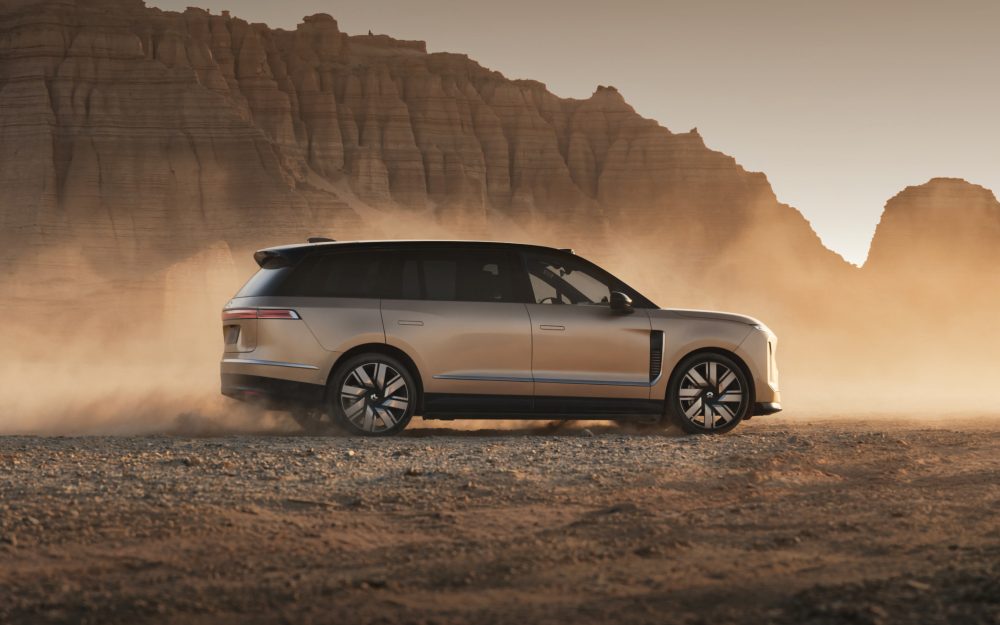
Summary: Onsemi and NIO have expanded their long-running collaboration to accelerate the carmaker’s move from 400V to 900V architectures, with onsemi’s latest EliteSiC enhanced M3e silicon carbide now underpinning the next NIO 900V EV platform — including the ES9 flagship SUV and additional models debuting at the 2026 Beijing Auto Show.
Key engineering takeaway: The enhanced M3e SiC technology improves body diode characteristics and reduces turn-on energy losses (Eon) while preserving short-circuit robustness. onsemi says these advances translate into higher system output, improved thermal performance and increased overall drivetrain efficiency, with shorter charging times supported by high-voltage, fast-charging systems.
Why it matters: onsemi says the collaboration reflects a broader shift in the auto industry towards closer alignment between automakers and semiconductor companies as vehicles become more power-intensive. EliteSiC now underpins the NIO 900V EV platform, building on a partnership that began with EliteSiC supporting NIO’s 400V platforms and has evolved into system-level alignment.
onsemi (Nasdaq: ON) today announced an expanded strategic collaboration with NIO Inc. (NYSE: NIO) to advance next-generation electric vehicle (EV) platforms. Building on a multi-year partnership, the companies are more closely engaging to accelerate NIO’s transition from 400V to 900V architectures, enabled by onsemi’s latest EliteSiC enhanced M3e technology.
onsemi’s EliteSiC enhanced M3e technology delivers optimized switching performance through improved body diode characteristics, reducing energy losses (Eon) while maintaining strong short-circuit robustness. These advances translate into higher system output, improved thermal performance, and increased overall drivetrain efficiency. For drivers, this means:
- More miles from every charge, by reducing energy lost as heat in the powertrain
- Stronger, more consistent acceleration, including at highway speeds and under load
- Shorter charging times, supported by high-voltage, fast-charging systems
- Reliable performance over time, with power systems designed to operate under demanding conditions
Inside The Expanded NIO 900V EV Platform Partnership
The expanded collaboration builds on a longstanding partnership, which began with onsemi’s EliteSiC technology supporting NIO’s 400V platforms and has evolved into a strategic, system-level alignment. Today, onsemi’s EliteSiC technology underpins NIO’s transition to 900V architectures, including its latest flagship SUV, the ES9, and additional models debuting at the 2026 Beijing Auto Show.
“Electrification is entering a new phase where system efficiency and scalability are paramount,” said Hassane El-Khoury, President and CEO of onsemi. “Our expanded collaboration with NIO demonstrates how deep engineering alignment and aligned technology roadmaps can accelerate the transition to high-voltage architectures. With our EliteSiC technology, we are enabling higher performance, improved efficiency, and faster time-to-market for next-generation EV platforms.”
“NIO has consistently pushed the boundaries of intelligent electric mobility,” said Alan Zeng, CEO of XPT, NIO’s powertrain unit. “Our collaboration with onsemi has evolved alongside our technology roadmap—from early 400V systems to today’s 900V platforms. The performance and reliability of onsemi’s EliteSiC technology, combined with strong technical collaboration, are helping us deliver more efficient, high-performance vehicles to our customers worldwide.”
What Closer OEM And Semiconductor Alignment Signals For EVs
The companies’ collaboration reflects a broader shift in the auto industry toward closer alignment between automakers and semiconductor companies, as vehicles become more power-intensive. By supporting system-level integration, onsemi is helping customers bring scalable, higher-performance electric vehicle platforms to market more quickly and efficiently while reducing development complexity and accelerating execution. This approach is becoming increasingly important as automakers transition to higher-voltage architectures and more advanced electric drive systems.
For more EV news, click here.
