

 By ATN Editorial Team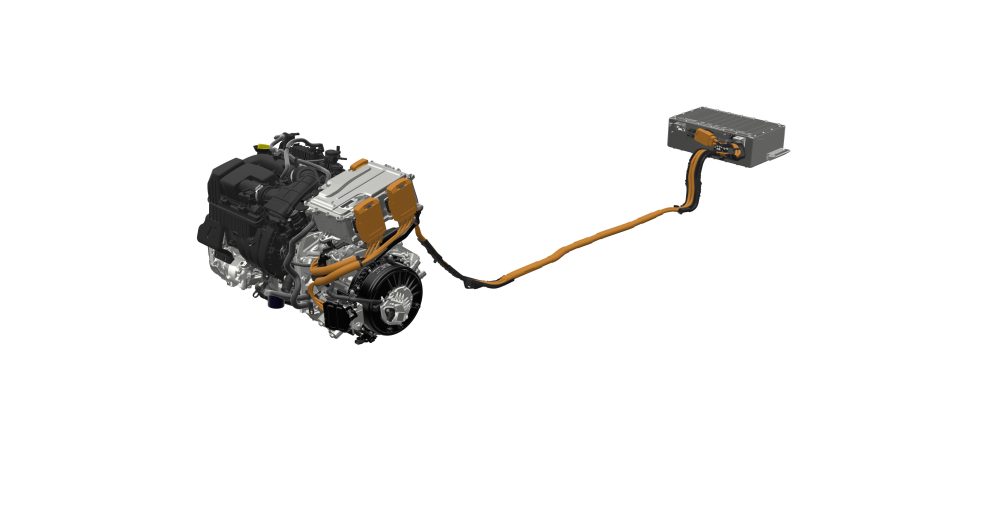
Powertrain electrification is a portfolio question now, not a binary one. Several major OEMs, Stellantis, Renault and Ford among them, have slowed pure-BEV ramp plans over the last 18 months and re-prioritised hybrid investment. The four architectures compared here, BEV, HEV, PHEV and REEV, share components but optimise for very different combinations of battery cost, charging access and regulatory exposure. This explainer breaks down what each architecture really is, where each wins, and what the data currently says about the right blend for a given OEM.
BEV (Battery Electric Vehicle): one or more electric motors, a single energy source (a high-voltage battery), no combustion. Charging is the only refuelling mechanism. Driveline complexity is low; battery cost dominates the bill of materials.
The Four Architectures, Defined
HEV (Hybrid Electric Vehicle): combustion engine plus a small (typically 0.8–1.5 kWh) high-power battery and a 30–90 kW e-motor in parallel, series or power-split arrangement. The battery is charged exclusively by the engine and regenerative braking; there is no plug. The HR18 hybrid system from Horse Powertrain is a current example of a fully integrated parallel HEV unit.
PHEV (Plug-in Hybrid Electric Vehicle): same architecture as an HEV, but with a larger battery (10–25 kWh) that can be charged from the grid. Typically delivers 30–100+ km of pure-electric range before the engine starts.
REEV (Range-Extender Electric Vehicle): a series-hybrid arrangement where a small combustion engine drives a generator that charges the battery; the wheels are always driven by the e-motor. Range-extender petrol engines have made a notable comeback in 2025–26, particularly in the Chinese market.
Where Each Architecture Wins on Engineering Cost
The dominant cost in any electrified architecture is battery capacity. At Q1 2026 cell prices, roughly $75–95/kWh at pack level for LFP, $120–140/kWh for NMC, the marginal cost of the first kWh of battery installed in a vehicle is the most CO₂-effective dollar an OEM can spend. The marginal benefit of every additional kWh declines.
That single observation is why HEVs deliver the best CO₂-per-dollar of any electrification path: a 1 kWh battery captures most of the urban-driving regenerative braking energy and significantly improves engine load-point efficiency for very modest cost. Beyond that, additional capacity buys diminishing returns on emissions until the vehicle reaches enough capacity to displace meaningful daily mileage on electric power, the PHEV regime, around 10–15 kWh.
Above 60 kWh, the additional capacity is buying range, not emissions reduction. This is the BEV regime: the cost-effectiveness shifts from emissions to range and charging-infrastructure independence.
The Charging-Infrastructure Multiplier
BEV economics depend critically on charging access. In markets with dense home charging (Norway, Netherlands) or strong DC fast-charging networks (most of China’s tier-1 cities), BEVs are competitive earlier in the engineering cost curve. In markets with sparse charging (most of the US outside coastal corridors, much of Eastern Europe, most of South-East Asia), the same vehicle hits a usage barrier that PHEV or REEV architectures sidestep.
This is the central reason BEV-only OEMs in 2024–25 underperformed projections: their cost models assumed charging-infrastructure parity that didn’t materialise outside specific geographies. OEMs with mixed BEV/PHEV/HEV portfolios, Toyota, Hyundai, Stellantis, were able to absorb the demand-side miss without parking inventory.
The Regulatory Dimension
Tightening emissions regulations, Euro 7, China 7, US EPA Tier 4, structurally favour electrification but apply differently to each architecture. Pure HEVs face the toughest constraint because their tailpipe emissions are still measured directly. PHEVs benefit from utility-factor weighting (the assumption about how much driving happens on electric power) which has been tightened recently in Europe but remains favourable. BEVs effectively zero out tailpipe regulatory exposure.
The compliance calculation has also re-introduced REEVs into the conversation. A small, highly-optimised range-extender petrol engine running at a single load point produces extremely low emissions per kWh of energy delivered, while letting the vehicle architecture stay BEV-shaped (single drive motor, no transmission, no driveshaft). The Horse Powertrain X-Range C15 is a clean example of an OEM-grade REEV unit that lets a BEV platform absorb a range-extender without architectural compromise.
Where Each Architecture Fits in 2026
HEV, high-volume entry segments, daily-driver vehicles with no home charging, markets with fuel-cost sensitivity but constrained battery supply. The HR18 HEV-class powertrain is a fit for this category. Best CO₂-per-dollar of any electrification.
PHEV, family vehicles in markets with mixed home/destination charging and high motorway commuting. Best at meeting fleet-emission targets without forcing a buyer to switch to BEV.
REEV, large/heavy vehicles (full-size SUV, light commercial) where 80–90 kWh of battery is too costly or too heavy. Strongest current growth area, particularly in China.
BEV, markets and segments with charging access; performance vehicles where the e-motor torque profile is genuinely a buying criterion; and fleets with controlled duty cycles (depot return-to-base).
What Engineers Should Watch Next
Three engineering shifts will reshape this comparison again over the next 24 months. First, LFP and sodium-ion cell prices continuing their fall, if pack-level LFP drops below $80/kWh, BEV economics improve enough to absorb more segments. Second, integration of e-motors with transmissions, the ZF 8HP Evo and similar units are reducing the cost penalty of hybrid driveline complexity. Third, range-extender thermal efficiency, running a generator engine at one fixed load point opens combustion strategies (ultra-lean burn, high-rate Miller cycle) that aren’t practical in a transient drive cycle.
The right answer for an OEM’s 2027–28 product plan is almost certainly portfolio diversification, not a doubling-down on any single architecture. The compounding effect of these three shifts is what makes the engineering trade-off so fluid right now.
EV vs Hybrid Powertrain: Frequently Asked Questions
HEVs deliver the best CO₂-per-dollar of any electrification path. A small (1 kWh) battery captures most of the urban-driving regenerative braking energy and significantly improves engine load-point efficiency for very modest cost. Beyond that, additional battery capacity buys diminishing returns on emissions until the vehicle reaches the PHEV regime (10–15 kWh).
BEV economics depend on charging access. In markets with dense home charging or strong DC fast-charging networks, BEVs are competitive earlier. Above 60 kWh of battery, additional capacity is buying range, not emissions reduction. THAT is the BEV regime where the economic question shifts to range and charging-infrastructure independence.
A small range-extender petrol engine running at a single load point produces extremely low emissions per kWh of energy delivered, while letting the vehicle architecture stay BEV-shaped (single drive motor, no transmission). REEVs have particular appeal in large/heavy vehicles where 80–90 kWh of battery is too costly or too heavy.
HEV, high-volume entry segments and markets without home charging. PHEV, family vehicles with mixed home/destination charging and high motorway use. REEV, large/heavy vehicles, strongest current growth in China. BEV, markets with charging access and performance vehicles where e-motor torque is a buying criterion.
Three: continuing fall in LFP and sodium-ion cell prices (sub-$80/kWh changes BEV economics again); deeper integration of e-motors with transmissions reducing hybrid driveline cost; and range-extender engines exploiting single-load-point combustion strategies (ultra-lean burn, high-rate Miller cycle) that don’t work in transient drive cycles.
Further Reading From the ATN Powertrain Library
- HR18 Engine: Horse Powertrain’s 1.8-Litre Hybrid Explained — the integrated HEV-class architecture referenced in the HEV section above.
- Horse Powertrain Reveals 160 kg Hybrid V6 — a current example of a REEV-suitable petrol engine designed specifically for hybrid duty cycles.
- ETA Green Power Launches EV Powertrain With Zero Heavy Rare Earth Elements — a BEV-side example of how single-architecture investment is paying off in motor cost.
- BorgWarner Develops Variable Turbine Geometry (VTG) Turbocharger For Stellantis Hurricane 4 — the underlying ICE technology that lets HEV/PHEV engines reach near-Atkinson efficiency.
For more powertrain technology news, click the link.
For more powertrain news, click here.
