

 By ATN Editorial Team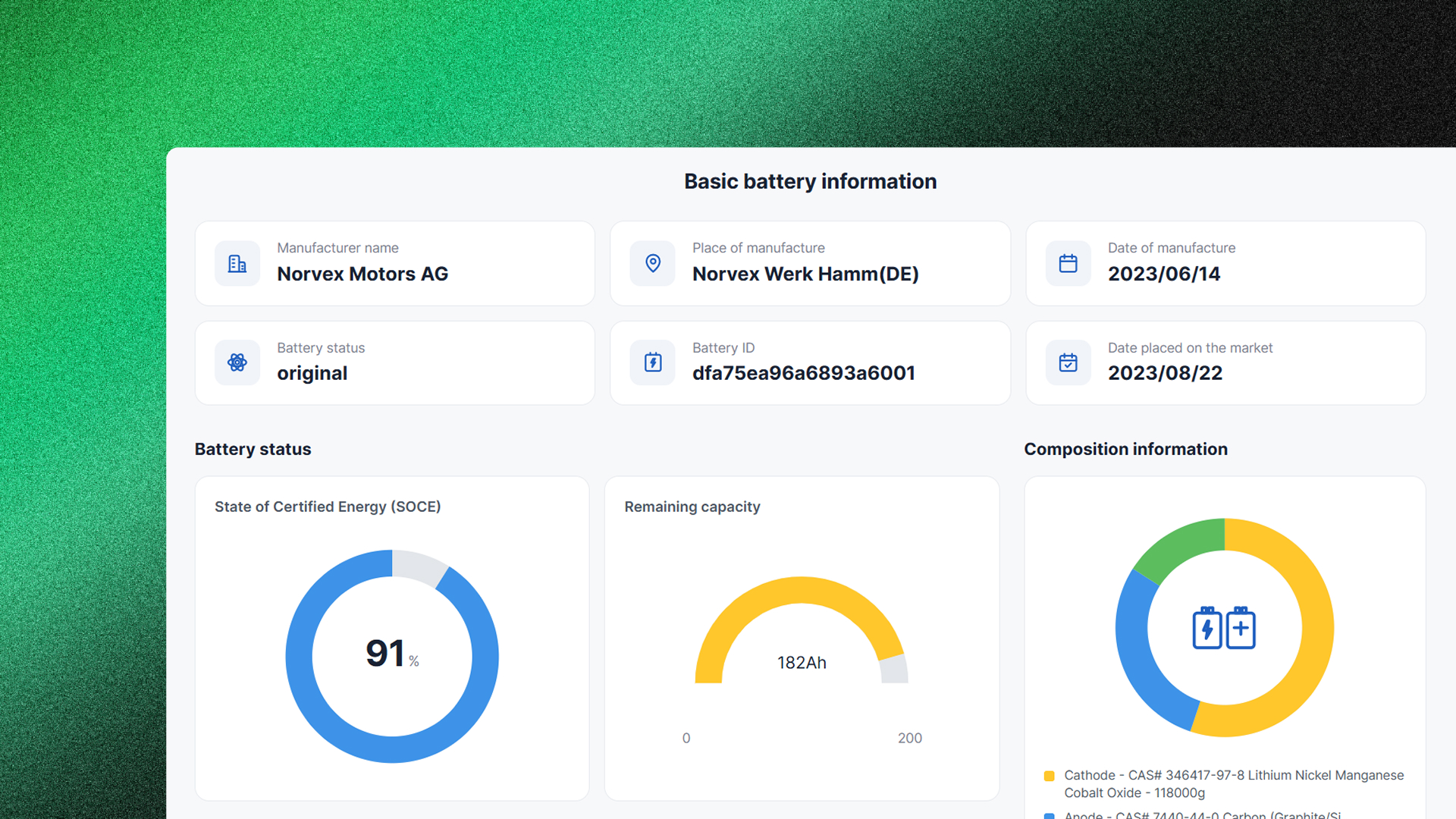
Summary: DENSO has launched a battery passport service, DENSO Digital Product Passport Solution for Battery, aimed at automakers, cell manufacturers and other businesses that must comply with the European Battery Regulation before it takes effect in February 2027.
Key engineering takeaway: The service generates a passport for each individual battery product using the data model developed by Europe’s Battery Pass-Ready consortium. It pulls battery data from a company’s enterprise systems and from its suppliers, and exposes it to end users through a QR code attached to the product. Access control separates what consumers can see from what economic operators can see. Record integrity rests on a chained structure drawn from blockchain work DENSO has run since 2017, in which altering one record leaves it inconsistent with the records linked to it.
Why it matters: From February 2027 a battery passport is mandatory for electric vehicle, light means of transport and industrial batteries sold in Europe, which moves traceability data out of sustainability reporting and into the compliance path for putting a product on the market. DENSO describes the architecture as multi-connectable, able to interface with multiple data platforms, and intends to extend it to other product categories under ESPR.
DENSO CORPORATION today launches DENSO Digital Product Passport Solution for Battery (the “Service”), a battery passport service that supports automakers, battery manufacturers and other businesses in complying with the European Battery Regulation while enhancing battery traceability.
The transition toward a circular economy, in which resources are continuously reused to improve sustainability, has gained increasing importance in recent years. In Europe, initiatives are underway to introduce Digital Product Passports (DPPs)*1, which digitally manage and provide traceability information about products, enhancing how companies and organizations find new ways to repurpose them. As one use case of DPPs, the battery passport is scheduled to become mandatory from February 2027 under the European Battery Regulation*2 for electric vehicle batteries, light means of transport (LMT) batteries, industrial batteries, and other battery products.
How The DENSO Battery Passport Service Collects Data
To support these efforts and address the regulatory developments, DENSO has launched its battery passport service. Based on the data model developed by the Battery Pass-Ready consortium*3 in Europe, the Service generates battery passports for individual battery products. By utilizing the Service, businesses can efficiently collect battery-related information from their enterprise systems and suppliers, while end users can easily access battery information by scanning QR codes attached to products.
Access Control And Tamper-Resistant Records
The Service also includes access control functionality that enables information visibility to be managed according to the type of user, such as consumers and economic operators*4. This allows organizations to achieve both regulatory compliance and secure data management while respecting data sovereignty principles. In addition, the Service leverages DENSO’s expertise in blockchain technologies, which the company has been researching and developing since 2017. By managing records in a chained structure, any modification to a record would result in inconsistencies with related records, creating a mechanism that is theoretically resistant to tampering. This helps ensure the reliability of data required for battery passports.
Extending The Service Beyond Batteries To ESPR
Looking ahead, DENSO plans to expand the Service beyond the battery passport to support other DPPs required under the Ecodesign for Sustainable Products Regulation (ESPR)*5. The Service adopts a multi-connectable architecture that can interface with multiple data platforms, enabling future expansion to a wider range of product categories beyond batteries.
DENSO will continue to support regulatory compliance not only in Europe but also across global markets. By helping customers, including automakers, create value through resource circulation, DENSO aims to contribute to the realization of a more sustainable society.
For more information about the Service, please visit the product webpage below:
https://www.denso.com/global/en/products/sp/dpp/
DENSO also shares various initiatives related to battery passports through the news articles listed below. Please refer to them for additional information.
https://www.denso.com/global/en/news/newsroom/2025/20250324-g01/
https://www.denso.com/global/en/news/newsroom/2026/20260629-g01/
https://www.denso.com/global/en/news/newsroom/2026/20260807-g01/
- *1 Digital Product Passport (DPP): A collective term for digital records that contain a wide range of information throughout a product’s lifecycle, including the manufacturer, materials used, recyclability, and disassembly methods, in order to ensure product traceability and demonstrate sustainability-related information.
- *2 European Battery Regulation: A regulation that entered into force in the European Union in August 2023 to promote the production and use of sustainable battery products.
- *3 Battery Pass-Ready consortium: An international consortium established to support compliance with the battery passport requirements of the European Battery Regulation, which will take effect in February 2027, by promoting the development of a testing environment where companies can verify in advance the conformity of their passport data and systems.
- *4 Economic Operators: Businesses responsible for the manufacture, import, export, sale, or other battery-related activities under the European Battery Regulation.
- *5 Ecodesign for Sustainable Products Regulation (ESPR): A comprehensive European framework that establishes environmental performance requirements for nearly all products placed on the EU market. The regulation covers areas such as durability, recyclability, reparability, energy efficiency, and the implementation of Digital Product Passports (DPPs). It entered into force in July 2024.
Battery Passport FAQ
What is a battery passport?
A battery passport is a digital record that carries a battery’s manufacturing, composition, performance and end-of-life data across its whole lifecycle. It is one use case of the Digital Product Passport, and end users reach it by scanning a QR code attached to the product.
How does the DENSO battery passport service work?
DENSO Digital Product Passport Solution for Battery generates a passport for each individual battery product using the data model developed by the Battery Pass-Ready consortium. It collects battery-related information from a company’s enterprise systems and from its suppliers, then exposes that data through a QR code on the product.
When does the EU battery passport become mandatory?
February 2027, under the European Battery Regulation. The regulation itself entered into force in the European Union in August 2023.
Which batteries need a battery passport?
Electric vehicle batteries, light means of transport (LMT) batteries, industrial batteries and other battery products placed on the EU market.
What is the difference between a battery passport and a digital product passport?
A Digital Product Passport (DPP) is the general framework, covering a wide range of lifecycle information for a product including manufacturer, materials used, recyclability and disassembly methods. The battery passport is the first DPP use case to become mandatory. DENSO says it plans to extend the same service to other DPPs required under the Ecodesign for Sustainable Products Regulation (ESPR).
Further Reading On Battery Passports
- AVL Launches Digital Battery Passport
- EU-Funded Project To Establish Digital Battery Passport
- Global Battery Alliance Unveils Results Of Wave Two Battery Passport Pilots
For more battery technology news, click here.
