

 By ATN Editorial Team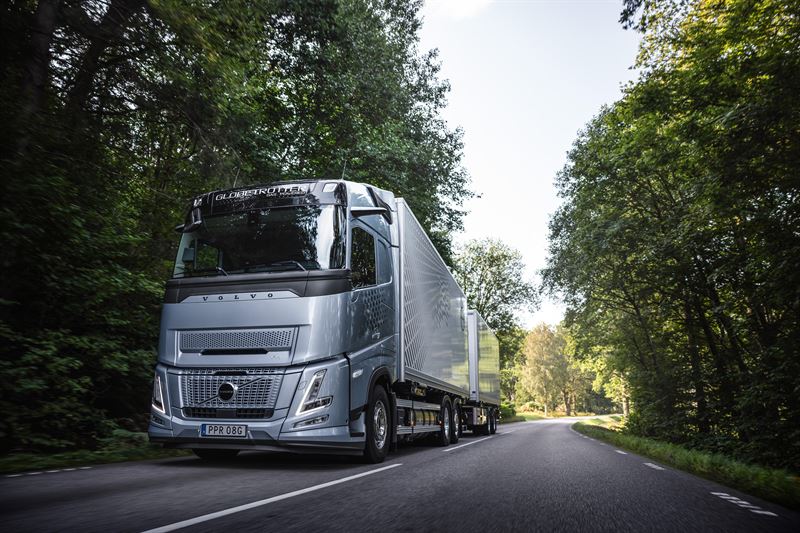
Summary: Volvo Trucks has launched a multi-billion SEK investment built around its Volvo Trucks new powertrains range, combining a long-range battery-electric heavy-duty model with up to 700 km of range, a new 13-litre combustion engine platform for diesel and gas, and a hydrogen ICE programme aimed at commercial launch before 2030.
Key engineering takeaway: Under the Volvo Trucks new powertrains strategy, a single 13-litre engine platform serves both a diesel and a gas engine, with both ready from the start for renewable fuels such as biodiesel and biogas, and hydrogen combustion as the next step. Battery-electric trucks will be assembled in Gothenburg and Ghent; the combustion engines in Skövde, with sales from Q3 2026.
Why it matters: Fuel supply, fuel infrastructure and customer preferences differ significantly between regions; Volvo Trucks new powertrains follow a three-path strategy (battery electric, fuel cell electric, renewable-fuelled ICE), with a single engine platform giving larger production volumes and the flexibility to serve customers in all regions and transport segments.
Volvo Trucks is launching a multi-billion SEK investment in technologies that will strengthen its global product offers and competitiveness for years to come and enable reaching the goal of net-zero emissions by 2040.
An all-new fuel-saving combustion engine platform made for multiple renewable fuels including future hydrogen applications as well as new electric drivelines with ranges of up to 700 km will future-proof Volvo’s trucks in all markets and all transport segments.
The global customer base of Volvo Trucks’ sales operations calls for a wide range of efficient powertrains as fuel supply, fuel infrastructure and customer preferences differ significantly between regions and markets.
“This is a hugely important launch as the decarbonization of the transport industry needs to accelerate, and the new technologies we are launching now will offer transport companies the best of two worlds,” says Roger Alm, President Volvo Trucks.
He continues: “Our second-generation electric trucks are capable to replace traditional diesel trucks in most cases. However, in certain regions and transport segments we also need the combustion engine to reduce CO2 now, and in the future. Our new engines offer the flexibility needed to satisfy customers in all regions and in all transport segments. One single engine platform will also give us very good synergies and larger production volumes.”
Inside Volvo Trucks New Powertrains: Battery Electric
Volvo Trucks has pioneered the market for battery electric trucks since 2019 and now the company is taking the next steps. A new long-range heavy-duty model represents a breakthrough with an electric range of up to 700 km on one charge.
Volvo is also launching an upgraded range of electric models that will enable more transport segments and operators to shift from traditional fuels to electric. Volvo offers 8 different electric models and has sold more than 6,000 battery electric trucks in more than 50 countries.
Volvo Trucks New Powertrains: Combustion, Gas And Hydrogen
The combustion engine plays an important role in Volvo’s net zero ambitions. An all-new 13-litre engine platform is launched, which will be used for two engines – diesel and gas-powered.
Both are ready from start for renewable fuels such as biodiesel and biogas, paving the way for transport companies to run their truck fleets with net-zero emissions. The next step in gas fuel is hydrogen-powered combustion engines which Volvo has begun testing on public roads with commercial launch planned to take place before 2030.
Volvo’s new battery-electric trucks will be produced in Gothenburg, Sweden and Ghent, Belgium, and rollout will happen step by step, starting 2026. The new combustion engines will be produced in Skövde, Sweden, with sales starting during the third quarter of 2026.
Volvo Trucks drives the decarbonization of transport to reach its net-zero emissions target by 2040 using a three-path technology strategy. This approach is built on battery electric, fuel cell electric and combustion engines that run on renewable fuels like green hydrogen (produced by splitting water into hydrogen and oxygen using renewable electricity), biogas (bio-LNG), biodiesel and HVO (hydrotreated vegetable oil).
For more electrification news, click here.
