

 By ATN Editorial Team
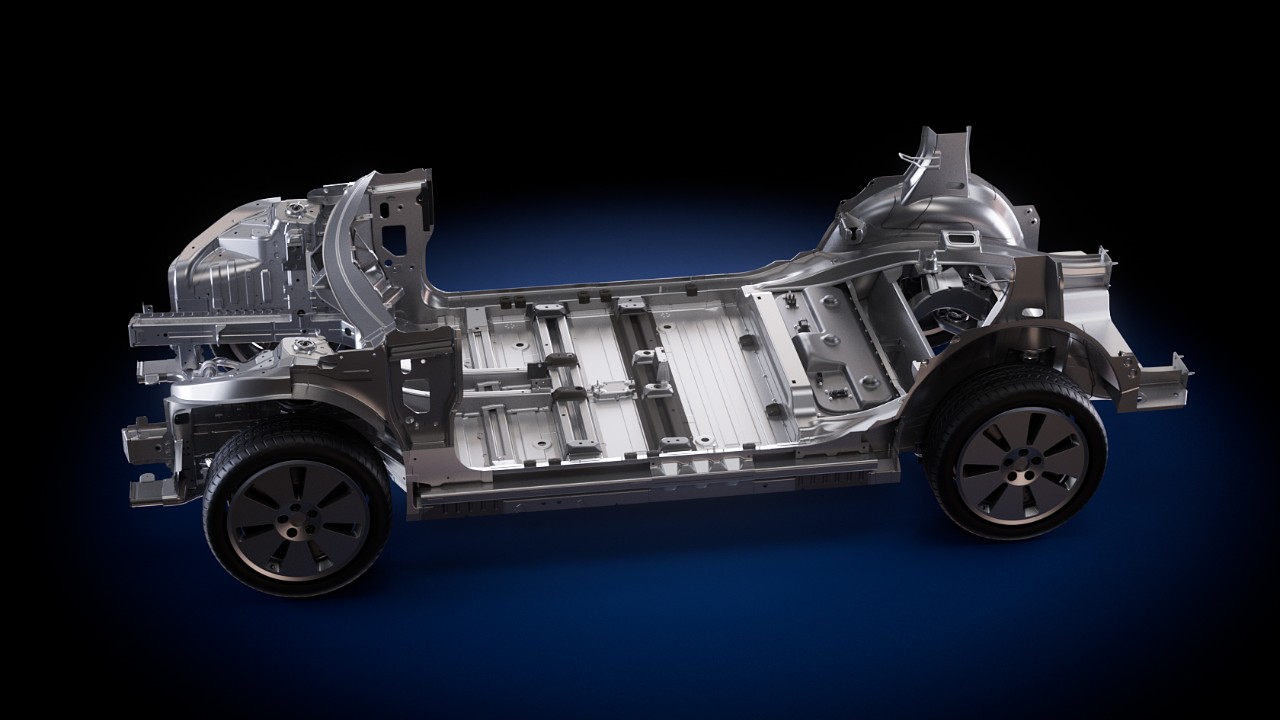
Summary: GM has outlined the GM fourth-generation EV platform, built for broad appeal in the market’s largest segments, which combines lithium manganese rich (LMR) battery chemistry in prismatic cells, more efficient electric propulsion, centralised computing and updated Super Cruise. GM says the platform is being developed on its new engineering operating system, a concurrent process it expects to halve the traditional five-year vehicle development timeline.
Key engineering takeaway: The LMR prismatic cells are produced by Ultium Cells, GM’s joint venture with LG Energy Solution in Spring Hill, Tennessee, and are designed to offer 33% more energy density than lithium iron phosphate (LFP) at a comparable price. A new family of electric motors and power electronics reduces the number of parts inside each drive unit by 40%, and the new compute and electrical architecture has fewer control modules, 30% less wiring than today’s EVs and 40 times more processing power for AI-enabled features. GM says the LMR batteries, electric drive units and aerodynamics on the GM fourth-generation EV platform combine to deliver roughly 20% more range on every kilowatt-hour.
Why it matters: GM presents the platform as the payoff from designing the whole vehicle as one system, with mass and aerodynamic benefits flowing through development so that the battery can be less costly, the motors smaller and the structure and components lighter. The new compute and electrical architecture also lets a vehicle test its own electrical connections as it moves down the assembly line, eliminating the final validation check once the vehicle has been built.
GM’s fourth-generation EV platform is coming. Built for broad appeal in the market’s largest segments, it will represent the culmination of GM’s engineering capabilities, combining the world’s first production lithium manganese rich (LMR) battery, more efficient electric propulsion, centralized computing, and updated Super Cruise in an accessible, high-value package.
Traditionally, vehicle development has worked like a relay race: One team finishes its work and hands it to the next. GM is changing that approach, developing the platform on its new operating system so designers, engineers, and manufacturing teams can explore more possibilities and solve problems together earlier instead of waiting for each other down the line.
Instead of defining limited paths for a vehicle and picking one, teams can explore hundreds of thousands of options through concurrent development and a “better-faster” cycle.
Every component, every gram, and every atom of material earns its way into the vehicle. Mass and aerodynamic benefits flow through development: The battery can be less costly, the motors can be smaller, the structure and components can be lighter, and the vehicle gets stronger. This concurrent process is expected to halve the traditional five-year vehicle development timeline.
Initial work on our fourth-generation EV platform points to big gains over today’s vehicles. New lithium manganese rich (LMR) prismatic batteries, electric drive units, and aerodynamics combine to deliver roughly 20% more range on every kilowatt-hour of energy. That’s the payoff from designing the whole vehicle as one system.
LMR Prismatic Battery Cells From Ultium Cells
At the heart of the platform is LMR battery chemistry in prismatic cells produced by GM’s Ultium Cells joint venture with LG Energy Solution in Spring Hill, Tennessee. GM plans to use LMR in its highest-volume EV segments, where range, durability, and affordability matter most.
Developing a new battery chemistry traditionally means building and physically testing hundreds or thousands of cell designs—a process that can take years. With LMR, GM used computer modeling to test more than 300,000 battery designs before building a single physical prototype. For our fourth-generation EV platform, the team moved from its first LMR battery pack concept to formal program approval in just one month.
LMR is designed to offer 33% more energy density than lithium iron phosphate, or LFP, a widely used low-cost chemistry. That means LMR can support longer driving range in a smaller, lighter battery pack at a price comparable to LFP.
Drive Unit Parts And Compute Architecture
GM is also simplifying the parts that propel the vehicle. A new family of electric motors and power electronics reduces the number of parts inside each drive unit by 40%. The result is a smaller, lighter system that can create more room for people and cargo while helping lower production costs.
The fourth-generation EV platform features GM’s new compute and electrical architecture with fewer control modules and 30% less wiring than today’s EVs. It also provides 40 times more processing power for AI-enabled features. Together, these changes extend the “better-faster” development approach across the life of the vehicle with a simpler foundation for future software updates, smarter energy management, more responsive displays and voice controls, and continued improvements to features like Super Cruise and OnStar.
Digital Manufacturing Models And Assembly Line Testing
In the fourth-gen EV’s manufacturing process, assembly workers will be armed with insight. Digital models will allow manufacturing teams to test production steps, review equipment placement, and identify safety or ergonomic concerns before new hardware is installed. When production is underway, PlantBrAIn, GM’s factory intelligence platform, will combine plant-floor data with computer models to help teams improve how fourth-gen electric vehicles and battery packs are built.
We’re already proving it out. At GM’s battery-pack assembly facilities, this approach has helped us get battery packs through the process 30 percent faster. Similar tools are used across stamping, casting, welding, painting, and final assembly.
Fourth-gen EVs will also aid in their own successful build process. Thanks to the new compute and electrical architecture, a vehicle can test electrical connections as it moves down the line, eliminating the final validation check once the vehicle has been built.
GM Fourth-Generation EV Platform: Frequently Asked Questions
What is the GM fourth-generation EV platform?
The GM fourth-generation EV platform is GM’s next electric vehicle platform, built for broad appeal in the market’s largest segments. It combines lithium manganese rich (LMR) battery chemistry in prismatic cells, more efficient electric propulsion, centralised computing and updated Super Cruise, and GM is developing it on its new engineering operating system, a concurrent process it expects to halve the traditional five-year vehicle development timeline.
What is an LMR battery?
LMR stands for lithium manganese rich, a family of lithium-ion cathode chemistries in which manganese makes up a large share of the transition metal content and the cathode carries more lithium than a conventional layered oxide. Manganese is more abundant and less costly than nickel and cobalt, which is why LMR is studied as a lower-cost route to higher energy density. GM describes the LMR battery on its fourth-generation EV platform as the world’s first production LMR battery, produced in prismatic cells by Ultium Cells in Spring Hill, Tennessee.
How does LMR compare with LFP?
According to GM, LMR is designed to offer 33% more energy density than lithium iron phosphate (LFP), which GM describes as a widely used low-cost chemistry. GM says this means LMR can support longer driving range in a smaller, lighter battery pack at a price comparable to LFP, and plans to use LMR in its highest-volume EV segments.
How much more range does the GM fourth-generation EV platform deliver?
GM says initial work on the platform shows the new LMR prismatic batteries, electric drive units and aerodynamics combining to deliver roughly 20% more range on every kilowatt-hour of energy compared with today’s vehicles.
What changes in the electrical architecture?
The platform uses GM’s new compute and electrical architecture, with fewer control modules, 30% less wiring than today’s EVs and 40 times more processing power for AI-enabled features. GM says the architecture also allows a vehicle to test its electrical connections as it moves down the assembly line, eliminating the final validation check once the vehicle has been built.
Further Reading
- LG and GM to Jointly Develop Prismatic Battery Cell Technology
- What Is A Zonal Architecture? An Engineer’s Guide To Zone ECUs
- Ford Launches Universal EV Platform And Advanced Prismatic LFP Batteries
- Stellantis STLA One Modular Vehicle Architecture Launches 2027
For more battery news, click here.
