

 By ATN Editorial Team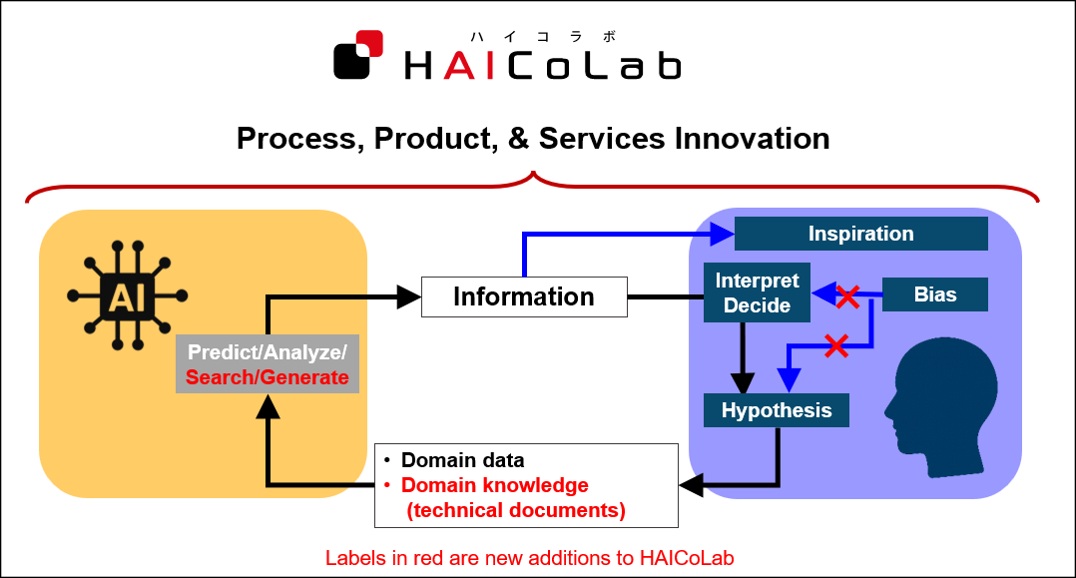
Summary: Yokohama Rubber has put a proprietary generative AI system into full-scale operation that uses retrieval-augmented generation to search the technical documents it has accumulated internally and answer developers’ questions from their contents.
Key engineering takeaway: The retrieval-augmented generation system draws on regulatory documents, procedure manuals, technical reports and case studies. An AI agent interprets the intent behind each question, then autonomously repeats a loop of search planning, information retrieval and result evaluation to raise the accuracy of the answer it returns.
Why it matters: Every response displays links to the original documents it was built from, so a developer can check the basis and appropriateness of an answer instead of taking it on trust. Yokohama Rubber says the retrieval-augmented generation system adds a mechanism that uses domain knowledge accumulated in technical documents with AI, expanding its tyre development environment based on HAICoLab.
The Yokohama Rubber Co., Ltd., announces that it has developed and begun full-scale operation in August 2026 of a proprietary generative AI system utilizing RAG (Retrieval-Augmented Generation), which searches various technical documents accumulated internally and presents responses based on their contents. This new system contributes to further accelerating and enhancing tire development by providing rapid and accurate access to technical information necessary for decision-making during the tire development process, including material development.
Yokohama Rubber developed this new system to expand the practical environment of its proprietary HAICoLab*1 AI utilization framework, which was established in October 2020. Yokohama Rubber has previously developed AI systems that predict a rubber compound’s physical properties and tire characteristics, generate new rubber compounds, and support mold design, and the Company is increasingly using data to create material and tire designs. Meanwhile, the technical knowledge (domain knowledge)*2 that developers need to make decisions during the tire development process can be found in a vast array of technical documents that include regulatory documents, procedure manuals, technical reports, and case studies. Creating a system that can quickly search this vast collection of data and provide information appropriate to development objectives and circumstances has been a challenge.
*1) A framework for “collaboration between humans and AI” that drives a virtuous cycle of innovation in products, processes, and services alongside human growth through a process that starts with enhancing AI by using data and knowledge accumulated in the company, the formulation of hypotheses by humans using metacognition, and development staff interpret and judge the results using the enhanced AI.
*2) Expertise and knowledge in a specific field or industry
How The Retrieval-Augmented Generation Agent Plans And Evaluates Searches
Yokohama Rubber development staff using this new system input questions tailored to the development’s objectives and situation, and the generative AI searches for the most relevant information from internal technical documents and provides responses based on that content. Yokohama Rubber development staff also created a mechanism in which an implemented AI agent grasps the intent of the staff’s questions and enhances the accuracy of its response by autonomously repeating the process of planning searches, retrieving information, and evaluating the results. Additionally, with the system displaying links to the original documents that serve as the basis for responses, development staff can verify the basis and appropriateness of those responses and use them in interpretation and decision-making. This has added a new mechanism that uses domain knowledge accumulated in technical documents with AI, thereby expanding the tire development environment based on HAICoLab.
Training DX Staff To Use HAICoLab
Along with the development of these AI systems, Yokohama Rubber is training DX staff capable of using HAICoLab. Yokohama Rubber will continue its efforts to enhance the new system’s capabilities and use data and knowledge accumulated internally to develop innovative products, processes, and services.
Retrieval-Augmented Generation: Frequently Asked Questions
What is retrieval-augmented generation?
Retrieval-augmented generation, usually shortened to RAG, is a technique in which a generative AI model searches a defined body of documents and composes its answer from what it retrieves, rather than from its training data alone. Yokohama Rubber applies it to the technical documents accumulated inside the company.
How does Yokohama Rubber’s retrieval-augmented generation system work?
Development staff enter a question tailored to the objectives and circumstances of the work. An AI agent interprets the intent of that question and autonomously repeats a cycle of planning searches, retrieving information and evaluating the results, which Yokohama Rubber says raises the accuracy of the response.
Which documents does the system search?
Internal technical documents including regulatory documents, procedure manuals, technical reports and case studies, which is where the domain knowledge developers rely on for decision-making has historically been held.
Can developers check where an answer came from?
Yes. The system displays links to the original documents that serve as the basis for each response, so staff can verify the basis and appropriateness of an answer before using it in interpretation and decision-making.
What is HAICoLab?
HAICoLab is Yokohama Rubber’s own framework for collaboration between humans and AI, established in October 2020. Earlier systems built on it predict rubber compound physical properties and tire characteristics, generate new rubber compounds and support mould design.
Further Reading
- Michelin Launches Universal Tire Digital Twin
- Continental Concept Tyre Uses 43% Recycled Material Content
- AI In Formula 1: Inside Aston Martin Aramco’s AMR Network
For more AI news, click here.
