

 By ATN Editorial Team
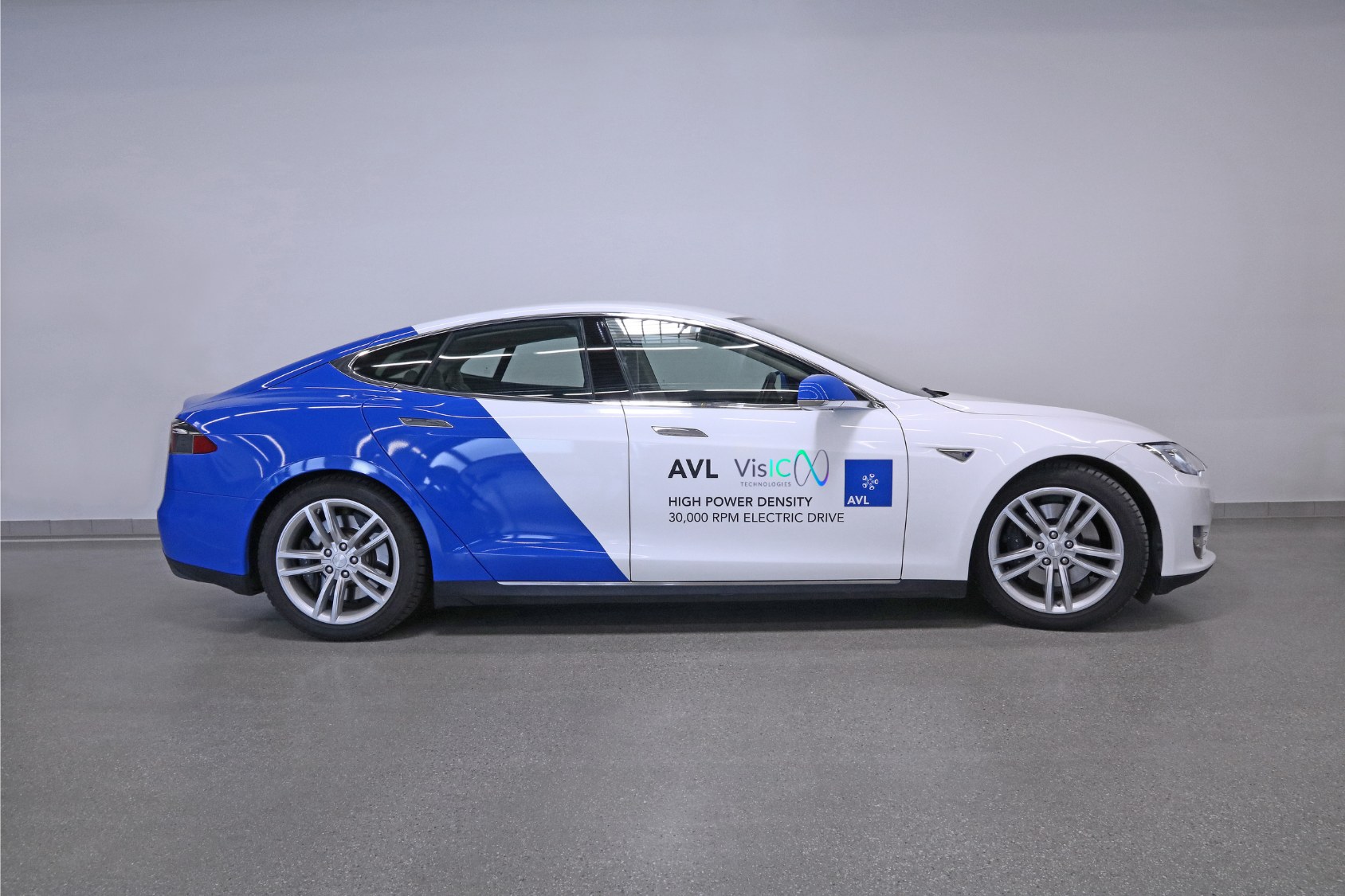
Summary: VisIC Technologies and AVL have integrated VisIC’s D³GaN power module technology into AVL’s vehicle demonstrator, where a GaN traction inverter using VisIC power modules sits within an electric drivetrain that combines a high-speed e-axle, advanced power electronics and vehicle control technologies. The program moves D³GaN from laboratory and dynamometer testing into a fully operational vehicle platform, bringing together technology from AVL, NXP Semiconductors and VisIC Technologies.
Key engineering takeaway: In earlier Dyno WLTC testing on AVL’s e-motor test bench in Germany, an inverter based on VisIC’s GaN-on-Silicon D³GaN technology achieved 99.67% efficiency at 10 kHz and more than 99.8% at 5 kHz, and the companies reported a reduction of inverter energy losses of more than 60% compared with comparable SiC inverters under the tested conditions. Development of the GaN traction inverter used VisIC’s D³GaN technology, an NXP driver, AVL’s PI850e Inverter Development Platform and AVL control software.
Why it matters: EV traction inverters operate across a wide range of speed, torque and load conditions, and the companies say reducing switching losses during partial-load operation can improve inverter efficiency and reduce cooling requirements. Running the GaN traction inverter in a complete electric drivetrain lets those efficiency advantages be evaluated at vehicle level rather than on the test bench alone, with the partners also planning 800V GaN power modules.
- The demonstrator vehicle showcases VisIC D³GaN power modules in an advanced AVL electric drivetrain, taking high-power GaN from test bench validation to a complete vehicle environment. The same D³GaN platform expends to power AI data centers and physical AI to benefit from high efficiency, compact size and reliability.
- The potential of the efficient evaluated D³GaN semiconductor platform in modern time is hard to overestimate.
VisIC Technologies, a developer of high-power gallium nitride (GaN) semiconductor solutions, and AVL, one of the world’s leading mobility technology companies, are advancing their collaboration with the integration of VisIC’s D³GaN power module technology into AVL’s vehicle demonstrator.
The vehicle provides a real-world development platform for evaluating next-generation electric propulsion technologies and demonstrates the potential of high-power GaN in one of the most demanding EV applications: the traction inverter. Evaluated under demanding conditions for power electronics, the demonstrator combines a high-speed e-axle, advanced power electronics and vehicle control technologies, with a GaN traction inverter using VisIC power modules. The overall project brings together technology from AVL, NXP Semiconductors and VisIC Technologies.
The program marks an important step in the evolution of GaN for electric mobility, moving VisIC’s D³GaN technology from laboratory and dynamometer testing into a fully operational vehicle platform.
Earlier Dyno WLTC Testing At AVL
The demonstrator builds on collaboration between AVL and VisIC Technologies started in 2024. In earlier Dyno WLTC testing at AVL facilities in Germany, an inverter based on VisIC’s GaN-on-Silicon D³GaN technology achieved 99.67% efficiency at 10 kHz and more than 99.8% at 5 kHz on AVL’s e-motor test bench. The companies reported an improvement compared with comparable SiC inverters and a reduction of inverter energy losses of more than 60% under the tested conditions.
The inverter development used VisIC’s D³GaN technology, NXP driver, AVL’s PI850e Inverter Development Platform and AVL control software.
Integration into the vehicle demonstrator now enables the technology to be evaluated within a complete electric drivetrain environment and illustrates how the efficiency advantages of GaN can translate from semiconductor and inverter performance into vehicle-level benefits.
Partial-Load Efficiency In EV Traction Inverters
EV traction inverters operate across a wide range of speed, torque and load conditions. VisIC’s D³GaN technology is designed to combine low switching and conduction losses with high power density for high-power automotive applications.
The benefits can be particularly important during partial-load operation where reducing switching losses can improve inverter efficiency and reduce cooling requirements. Current 400V battery technology is especially attractive for PHEV and Range extended HEV cars. At vehicle level, this creates the potential for a more compact power-electronics system, improved drivetrain efficiency and increased driving range.
The AVL demonstrator therefore provides more than a showcase of peak efficiency. It illustrates how GaN technology can operate as part of a complete high-performance EV drivetrain.
D³GaN For AIDC Infrastructure And Physical AI
Evaluated in the demanding automotive environment, VisIC’s D³GaN platform delivers the efficiency, power density and reliability required for next-generation power conversion. These same capabilities make the platform an excellent fit for AIDC infrastructure, where rapidly growing AI workloads require compact, highly efficient and scalable power supplies with lower energy losses and reduced cooling demand.
The platform is equally well suited to physical AI applications—including robotics, autonomous systems and intelligent industrial equipment—where power electronics must combine fast dynamic response, high efficiency, compact size and dependable operation under demanding conditions. Automotive validation therefore provides a strong foundation for deploying D³GaN across the emerging AI power ecosystem.
“Bringing D³GaN from the test bench into a fully operational vehicle is an important milestone for high-power GaN,” said Tamara Baksht, VisIC Technologies’ CEO. “The AVL demonstrator shows that GaN is no longer limited to discussing future potential. We can demonstrate the technology in the traction inverter of a real electric vehicle and show automotive manufacturers what higher efficiency, lower losses and higher power density can mean at system level.”
“Integrating a GaN traction inverter into a vehicle demonstrator is an important step in understanding the opportunities and challenges of bringing this technology into future automotive applications,” said Mathias Deiml, Technical Lead GaN Inverter Development, AVL Software and Functions. “The project combines semiconductor innovation with system-level development expertise and allows to push forward the state of the art regarding efficiency and advanced functionality.”
“This project demonstrates how strong collaboration can accelerate the development of emerging technologies for e-mobility,” said Dr. Thomas Frey, Head of Segment E-Mobility & E-Drive System, AVL Software and Functions. “By combining VisIC’s semiconductor expertise with AVL’s capabilities in inverter development and vehicle integration, we have established a platform for assessing the future potential of GaN technology in electric powertrains.”
Building Toward 800V GaN Power Modules
The collaboration between AVL and VisIC Technologies is also intended to support the development of scalable GaN solutions for future EV architectures. The companies previously announced plans to extend the GaN-on-Silicon platform toward 800V GaN power modules, addressing the growing adoption of higher-voltage battery and drivetrain systems.
VisIC’s GaN-on-Silicon approach also provides a potential manufacturing scalability advantage because the technology can leverage established silicon semiconductor manufacturing infrastructure. The companies have previously highlighted compatibility with 200 mm and 300 mm silicon foundries as part of the technology’s path toward high-volume production.
With the AVL vehicle demonstrator, the companies are taking another step toward bringing high-power GaN into mainstream electric propulsion, demonstrating that GaN has the potential to become a practical alternative for the next generation of EV traction inverters.
GaN Traction Inverter: Frequently Asked Questions
What is a GaN traction inverter?
A GaN traction inverter is the power electronics unit that converts the DC supply from an electric vehicle’s battery into the AC current that drives the traction motor, using gallium nitride (GaN) transistors as the switching devices instead of silicon IGBTs or silicon carbide (SiC) MOSFETs. In AVL’s vehicle demonstrator, the GaN traction inverter uses VisIC’s D³GaN power modules.
How efficient was the D³GaN inverter in testing?
In earlier Dyno WLTC testing on AVL’s e-motor test bench in Germany, an inverter based on VisIC’s GaN-on-Silicon D³GaN technology achieved 99.67% efficiency at 10 kHz and more than 99.8% at 5 kHz. The companies reported a reduction of inverter energy losses of more than 60% compared with comparable SiC inverters under the tested conditions.
Why do switching losses matter at partial load?
Switching losses are the energy dissipated each time a power transistor turns on or off, and they rise with switching frequency. A traction inverter spends much of its time well below peak power, where switching losses make up a larger share of total losses. AVL and VisIC say reducing switching losses during partial-load operation can improve inverter efficiency and reduce cooling requirements.
What is GaN-on-Silicon?
GaN-on-Silicon is a semiconductor approach in which a gallium nitride layer is grown on a standard silicon wafer rather than on a more costly native or silicon carbide substrate. VisIC’s D³GaN technology uses this approach, and the companies have highlighted its compatibility with 200 mm and 300 mm silicon foundries as part of the technology’s path toward high-volume production.
Are 800V GaN power modules planned?
Yes. AVL and VisIC Technologies previously announced plans to extend the GaN-on-Silicon platform toward 800V GaN power modules, addressing the growing adoption of higher-voltage battery and drivetrain systems.
Further Reading
- What Is A Traction Inverter? An EV Powertrain Engineer’s Guide
- Ricardo To Develop GaN Traction Inverters For New Nissan LEAF
- Nexperia And Aurobay To Evaluate GaN Power Semiconductors
- Wolfspeed 1200V SiC Six-Pack: EV Traction Inverter Modules
- ROHM Automotive 650V IGBT Cuts Conduction Loss To 1.55 V
For more power electronics news, click here.
